
She lived 111 years.
And spent nearly all of them remembering one night.
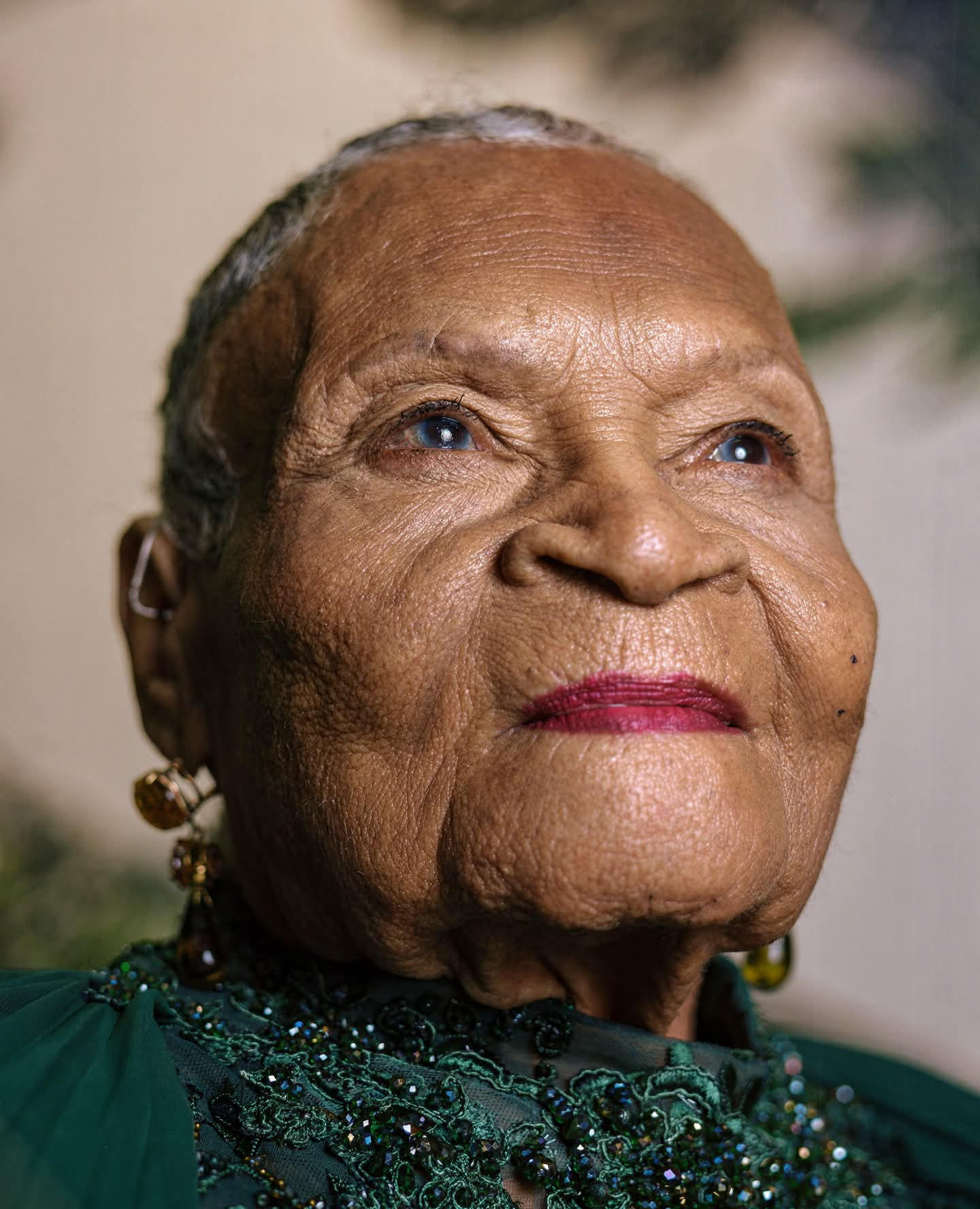
Viola Fletcher, the oldest known living survivor of the Tulsa Race Massacre, has died at 111 years old. With her passing, the distance between America and one of its greatest crimes grows thinner and more dangerous.
Because when the last witnesses leave us, denial gets louder.
On the morning of June 1, 1921, Viola was seven years old. She woke to banging. Shouting. Her mother’s voice cutting through sleep with terror sharp enough to last a lifetime. Violence had erupted in her neighborhood after a white woman accused a Black man of attempted rape, an accusation never proven, but never required to be.
That was all it took.
By the end of the day, Greenwood was burning.
Greenwood was not a slum. It was not marginal. It was one of the most successful Black communities in the country, so prosperous it was called Black Wall Street. Doctors. Lawyers. Newspapers. Schools. Businesses built by people who had clawed dignity out of a nation determined to deny it.
White mobs destroyed it anyway.
More than 1,000 homes and Black-owned businesses were reduced to ash. As many as 300 Black people were murdered. Some were shot in the street. Some were burned alive. Some were buried in unmarked graves that the city spent decades refusing to look for.
Viola and her family escaped by horse and buggy as their world collapsed behind them. When they returned, there was nothing to return to. Their home was gone. Their belongings were gone. Their sense of safety was gone.
They lived in a tent.
Let that sit.
A child who had gone to sleep in a home woke up homeless because white supremacy decided her existence was a threat.
Viola never slept well again.
Decades later, she would write words so devastating they should be etched into this country’s conscience:
“Imagine having the same horrible nightmare every night for 100 years.”
That was her life.
While America built myths about progress, Viola carried smoke in her lungs and fear in her bones. While textbooks skipped Tulsa or softened it into a “riot,” she lived with the truth. While insurance companies denied claims and the city refused accountability, she aged without restitution.
She did not receive justice.
She did not receive repair.
She received memory.
And even that was nearly stolen.
For most of the 20th century, the Tulsa Race Massacre was deliberately erased. Survivors were silenced. Records disappeared. Officials lied. Children were not taught what happened in their own city. America chose comfort over truth and asked Black people to carry the cost quietly.
Viola refused to let that happen.
At over 100 years old, she testified before Congress. She spoke not with rage, but with clarity. She did not exaggerate. She did not dramatize. She simply told the truth and trusted that it was enough.
Now she is gone.
She died on November 24, 2025, leaving behind only one other living survivor of the deadliest race massacre in American history.
One.
And that should terrify us.
Because this story is not ancient. It is not abstract. It is not resolved. The wealth stolen from Greenwood was never returned. The families displaced were never made whole. The graves are still being uncovered.
Viola Fletcher lived long enough to see America finally admit what it did.
She did not live long enough to see it repaired.
Her death is not just the passing of a woman. It is the thinning of evidence. The quieting of a voice that stood between truth and erasure.
So if this hurts, it should.
Because a nation that allows a child to be traumatized for a century and calls it history has not finished reckoning. It has only delayed it.
Remember her name.
Viola Fletcher.
A child of Greenwood.
A witness to fire.
A keeper of memory.
And now, the burden she carried for 111 years rests with us.








April AhavaYah
Kommentar löschen
Diesen Kommentar wirklich löschen ?