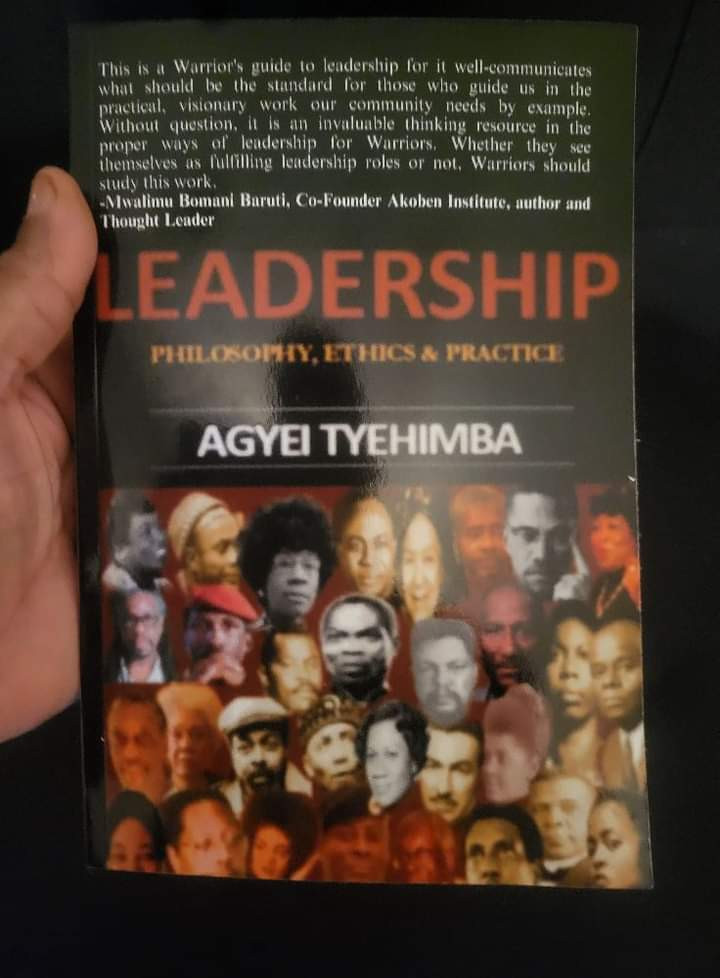
I will start speaking about books : Overview
"Leadership" by Agyei Tyehimba offers insights into effective leadership practices and principles. Here are some key points from the book:
1. **Vision and Purpose**: Effective leaders must have a clear vision and a sense of purpose. This clarity helps guide their actions and inspires others to follow.
2. **Empowerment**: Leadership is about empowering others. Tyehimba emphasizes the importance of fostering an environment where team members feel valued, confident, and capable of contributing.
3. **Integrity and Authenticity**: A strong leader must act with integrity and authenticity. Building trust is essential, and leaders should be true to their values and principles.
4. **Emotional Intelligence**: The book highlights the importance of emotional intelligence in leadership. Understanding one's emotions and those of others can enhance communication and relationship-building.
5. **Effective Communication**: Clear and effective communication is crucial for leaders. It fosters collaboration, resolves conflicts, and ensures that everyone is aligned with the organization's goals.
6. **Adaptability**: Leaders must be adaptable and open to change. The ability to pivot in response to new challenges and opportunities is essential for success.
7. **Cultural Awareness**: Tyehimba stresses the significance of cultural awareness in leadership. Understanding diverse perspectives and backgrounds can enhance team cohesion and effectiveness.
8. **Continuous Learning**: Leaders should embrace a mindset of continuous learning and growth. This commitment to self-improvement sets an example for others and enhances leadership effectiveness.
9. **Mentorship and Development**: The book emphasizes the importance of mentoring and developing future leaders. Investing in others contributes to the overall strength of the organization.
10. **Community and Collaboration**: Leadership extends beyond the individual. Building a sense of community and encouraging collaboration within teams leads to better outcomes and fosters a positive organizational culture.
These points reflect Tyehimba's philosophy on leadership, emphasizing the importance of integrity, empowerment, and adaptability in creating effective leaders and organizations.