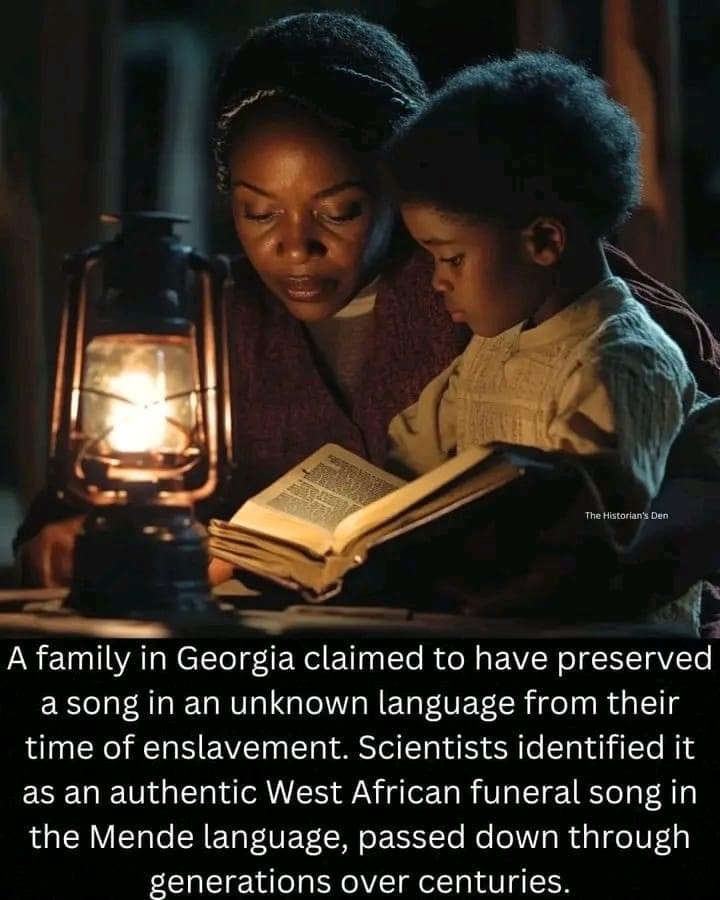
In the early 1930s, African American linguist Lorenzo Turner discovered a remarkable linguistic treasure among the Gullah people of coastal South Carolina and Georgia. Turner cataloged over 3,000 names and words of African origin, including a five-line song sung by Amelia Dawley from a remote Georgia fishing village. Although Amelia did not know the language of the song, it was later identified by a Sierra Leonean graduate student as Mende, his native tongue. This song, a West African funeral dirge, had been passed down through generations of Dawley’s family, surviving the brutal history of slavery and the Middle Passage.In the 1980s, American anthropologist Joseph Opala, while studying Bunce Island in Sierra Leone, found that many African captives from this region were sent to South Carolina and Georgia. Realizing the historical and linguistic connections, Opala, along with ethnomusicologist Cynthia Schmidt, traced Turner’s recording of Dawley’s song. They presented it to a Sierra Leonean music group, which recognized it as a traditional Mende funeral song. This discovery led to a significant cultural reunion in 1989, where the Gullah people from Georgia traveled to Sierra Leone to meet their long-lost relatives, highlighting the enduring cultural ties between the two regions.