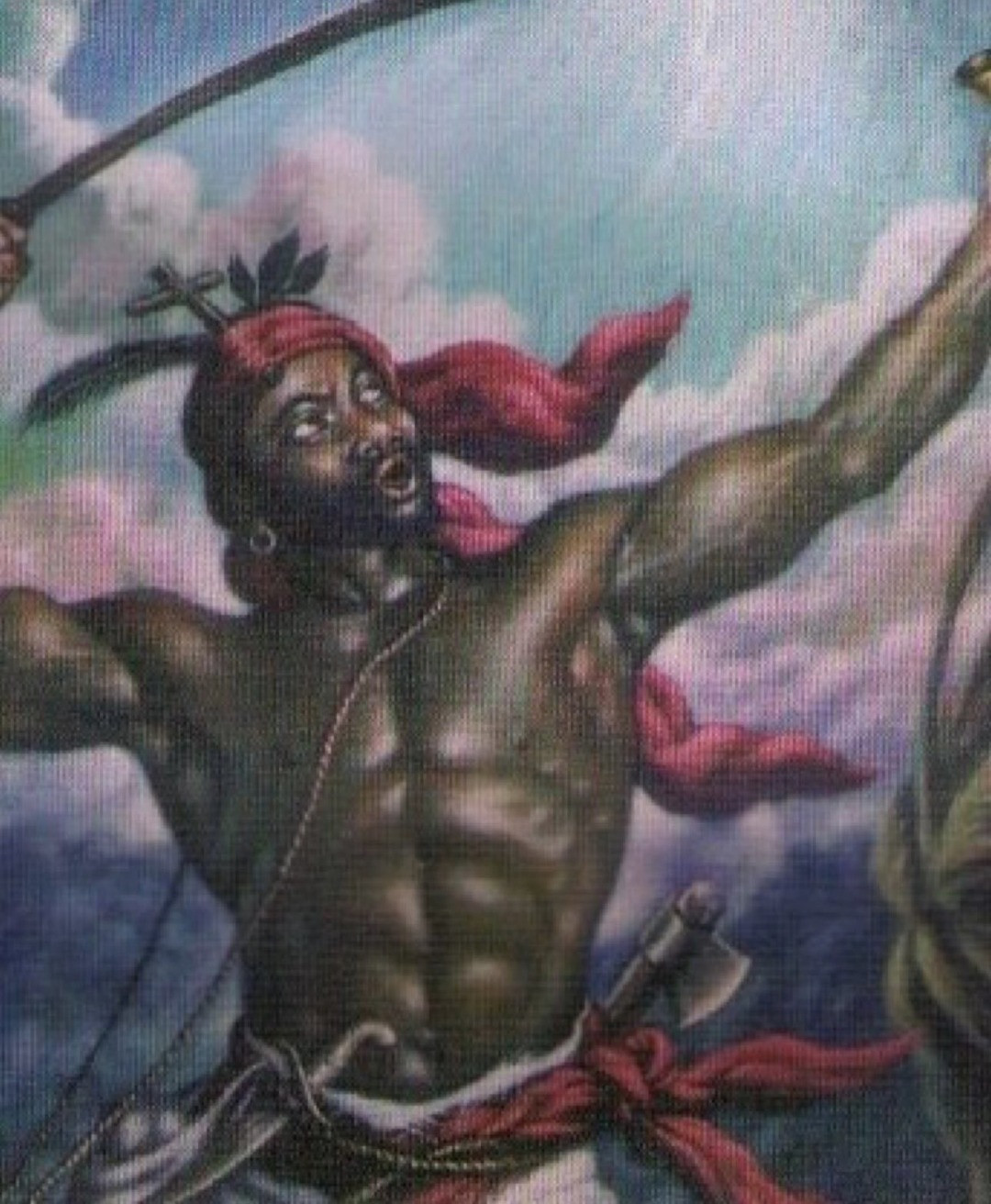
Dutty Boukman was a key figure in the Haitian Revolution and is remembered as a religious and revolutionary leader. He was likely born around 1767, possibly in Senegambia (West Africa), though his exact place of birth is uncertain. According to some historical accounts, Boukman was originally enslaved in Jamaica, where he worked on plantations. His nickname "Boukman" is believed to come from his literacy or knowledge of religious texts—he may have been called "Book Man" for his ability to read, a rare skill among enslaved people.
While in Jamaica, Boukman may have been exposed to the island's cultural mix of African spirituality and Christian influences. However, after an attempted revolt or for being considered rebellious, he was reportedly sold by his British owners and transported to Saint-Domingue (modern-day Haiti), a French colony. There, he continued working as an enslaved person but became a leader within the Vodou religious community.
Boukman’s role in the Haitian Revolution is best remembered for the Vodou ceremony he led at Bois Caïman on August 14, 1791. This gathering of enslaved Africans is considered a turning point that inspired the large-scale uprising against the French colonial regime. Boukman's powerful spiritual leadership and revolutionary vision helped ignite the revolution, which ultimately led to the creation of Haiti as the first independent Black republic in 1804.
Not long after the revolt began, Boukman was captured and killed by French forces in November 1791. His death was meant to discourage the revolution, but instead, it solidified his status as a martyr and symbol of resistance against colonial oppression. Boukman’s legacy is celebrated in both Haitian and Jamaican history as a symbol of defiance and the fight for freedom.