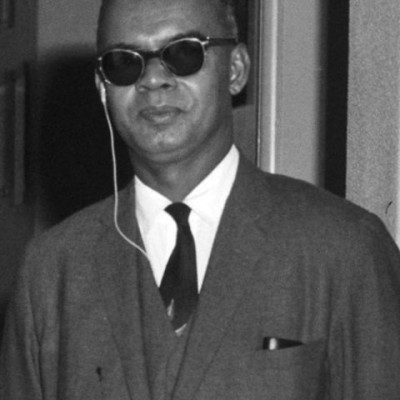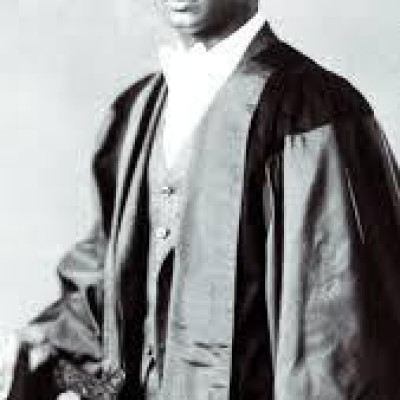
Eric Eustace Williams (1911–1981) was a historian, educator, and the first Prime Minister of Trinidad and Tobago, serving from the country's independence in 1962 until his death in 1981. Born in Port of Spain, he excelled academically and attended Oxford University on a scholarship, earning a doctorate in history. His groundbreaking dissertation was later published as Capitalism and Slavery (1944), a seminal work that explored the economic underpinnings of slavery and its role in the development of capitalism.
Williams returned to the Caribbean in the 1940s and became a prominent intellectual voice, lecturing and advocating for self-determination. In 1956, he founded the People’s National Movement (PNM), which became the leading political party in Trinidad and Tobago. Under his leadership, the country gained independence from Britain in 1962 and became a republic in 1976.
As Prime Minister, Williams focused on education, industrialization, and economic diversification to reduce dependence on oil and sugar exports. Known as the "Father of the Nation," he was a strong advocate for Caribbean unity and played a key role in the formation of the Caribbean Free Trade Association (CARIFTA) and later CARICOM.
Eric Williams passed away on March 29, 1981, at the age of 69, while still in office. His legacy as a scholar and leader remains central to the history of Trinidad and Tobago and the broader Caribbean region 🇹🇹...