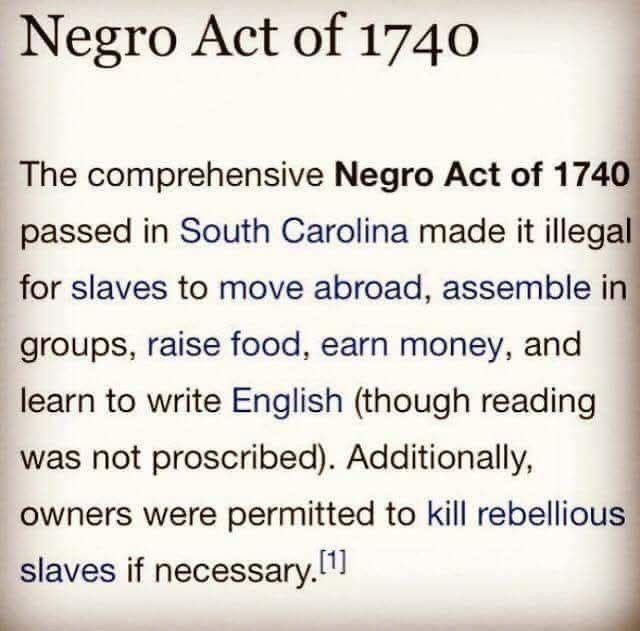
The Negro Act of 1740 was a law passed in the Colony of South Carolina in the 18th century, specifically targeting enslaved Africans and free Black people. It was a response to the Stono Rebellion of 1739, a large uprising of enslaved people. The law was designed to restrict the freedoms of enslaved individuals and prevent future revolts by implementing stricter controls.
Key provisions of the Act included: Limiting movement and assembly: Enslaved people were prohibited from gathering in large groups and could not travel without written permission from their masters. Restrictions on education: It made it illegal for enslaved people to learn to read or write. Limiting the ability to own property: Enslaved individuals were prohibited from owning property or engaging in trade.
Harsh punishments for rebellion: It imposed severe punishments for rebellious behavior, including executions, and legalized corporal punishment by masters. This act reflected the broader system of racial control and repression during the era of slavery, reinforcing the subjugation of Black people in South Carolina..