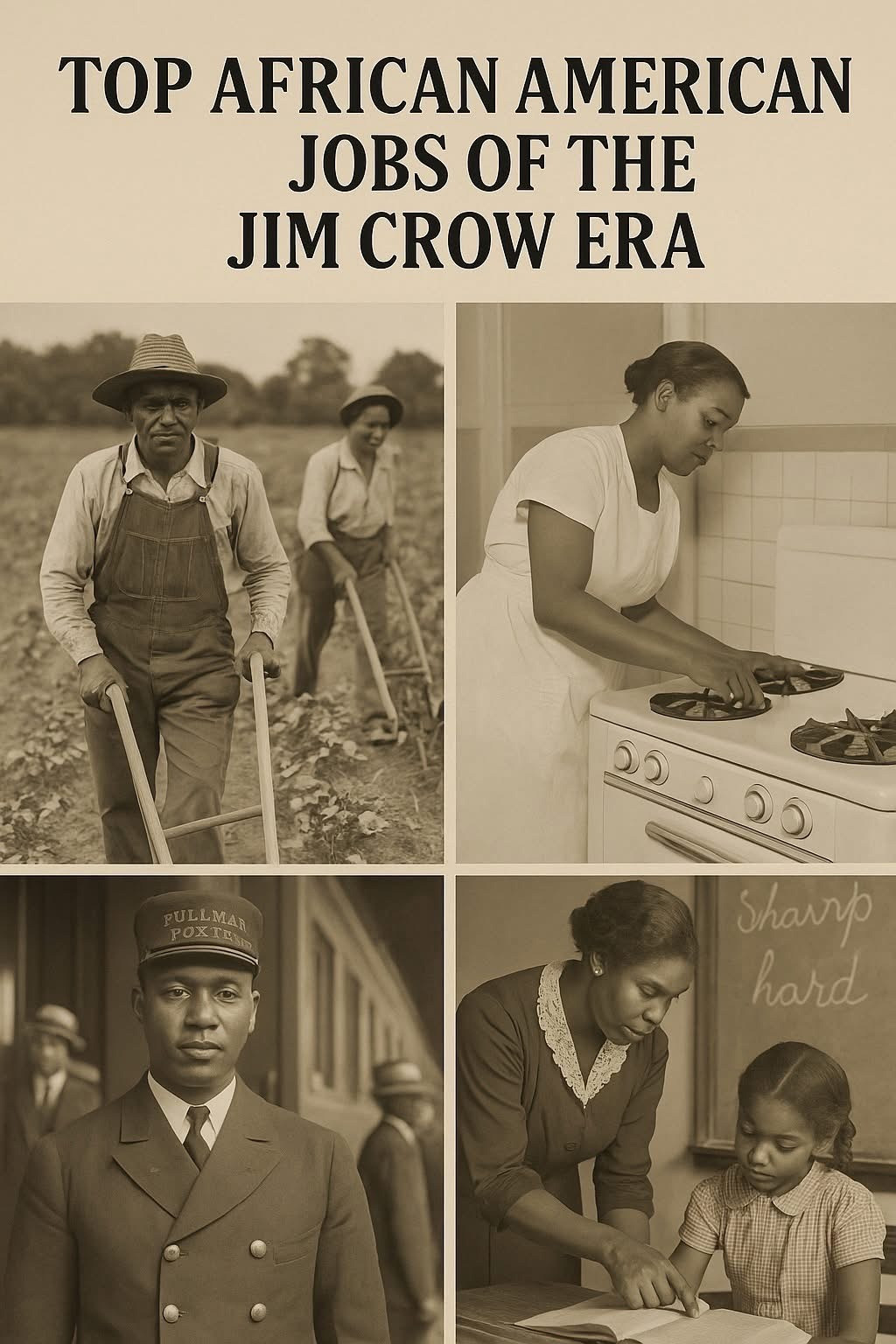
Top Jobs African Americans Held During the Jim Crow Era — And How They Shaped a Community’s Survival
During the Jim Crow era, work for African Americans was defined not just by necessity but by resilience, community-building, and strategic resistance. Segregation, discriminatory labor laws, and limited access to education forced Black workers into some of the lowest-paying jobs across the South and, later, in northern cities.
Yet within those constraints, Black communities created economic systems, professional networks, and cultural institutions that sustained families for generations.
Here are the top occupations that shaped Black life during Jim Crow — and the legacy they left behind.
1. Sharecroppers & Tenant Farmers
Sharecropping was the most common occupation for Black families after Reconstruction. They worked cotton, tobacco, sugarcane, and food crops under contracts often designed to trap them in debt to white landowners.
Despite the exploitation, Black sharecroppers preserved agricultural knowledge and built the foundation that supported generations.
2. Domestic Workers: Maids, Cooks, Nannies & Laundresses
Domestic service was one of the largest sources of employment for Black women. They managed households, cooked, cleaned, and cared for children—often for very low wages.
Yet these women funded education, migration, and homeownership, becoming the financial backbone of their families.
3. Pullman Porters & Railroad Workers
Pullman porters held some of the most respected jobs available to Black men. These positions offered stable pay, travel, and connections to national networks.
Their organizing laid groundwork for the Civil Rights Movement and helped build the Black middle class.
4. Teachers in Segregated Black Schools
Teaching was a deeply respected profession. Black educators shaped generations despite inadequate resources and segregated classrooms.
They were often community leaders and activists, challenging inequality through education.
5. Preachers & Church Leaders
Ministers held tremendous influence politically, socially, and spiritually. Black churches acted as community hubs—places of learning, leadership, and resistance.
Long before national movements began, churches were already organizing against Jim Crow.
6. Barbers & Beauticians
Black-owned barbershops and beauty salons were pillars of entrepreneurship and safe community spaces.
These businesses offered independence, dignity, and became hubs of political conversation and local organizing.
7. Midwives, Healers & Community Nurses
When segregated hospitals refused to treat Black families, midwives filled the gap. They delivered babies, provided prenatal care, and carried on healing traditions.
Their contributions saved countless lives across rural America.
8. Factory, Mill & Foundry Workers
After the Great Migration, many Black workers found higher-paying jobs in steel mills, shipyards, textile factories, and meatpacking plants.
Though still segregated and dangerous, these jobs offered wages that lifted families out of Southern poverty.
9. Drivers, Janitors, Porters & Messengers
Urban service jobs provided steady work and stepping stones to economic mobility.
Many workers used these roles to save money, buy property, or start small businesses.
10. Entrepreneurs & Small Business Owners
Despite segregation, Black communities built strong business ecosystems, including:
• Funeral homes
• Tailor shops
• Insurance companies
• Cafés and restaurants
• Ice delivery services
• Newspapers
• Boarding houses
These enterprises circulated wealth within the community and became symbols of pride and independence.
The Backbone of Black Southern Life
During Jim Crow, African Americans were disproportionately confined to agriculture, domestic service, and manual labor. But they also forged influential professions in education, ministry, midwifery, beauty culture, and business ownership.
These jobs were more than work—they were survival strategies, pathways to dignity, and seeds of the Civil Rights Movement.
For nearly a century, they formed the economic and cultural backbone of Black Southern life