20 Louisiana Plantations: Telling The Truth Behind The Big Houses
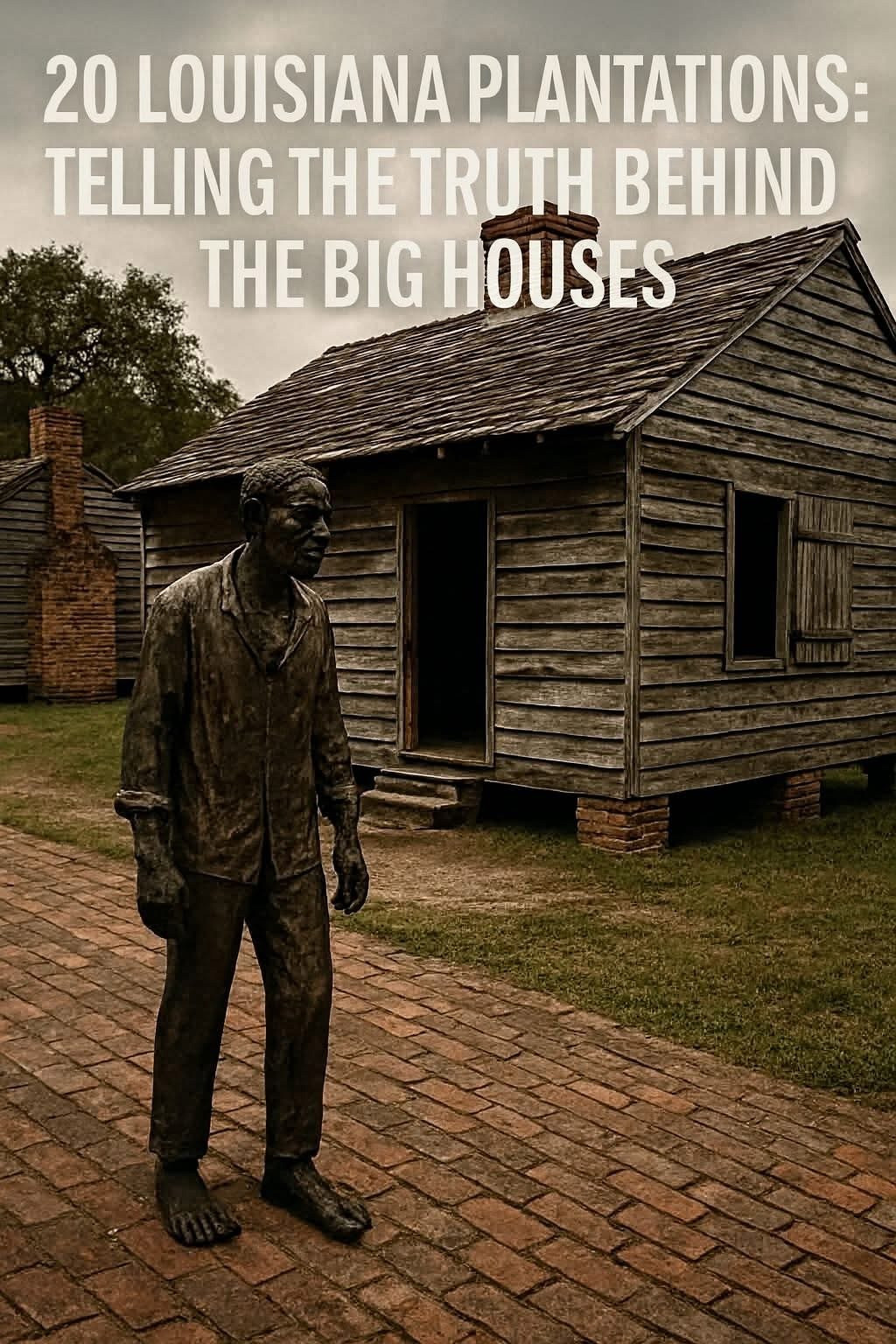
These 20 Louisiana plantations reveal the truth behind the big houses — stories of enslaved people whose lives, labor, and resilience built the state.
1. Whitney Plantation — St. John the Baptist Parish
Enslaved people: ~100
Known for: The only Louisiana plantation museum fully dedicated to the lives of the enslaved; unmatched archival records.
2. Evergreen Plantation — St. John the Baptist Parish
Enslaved people: ~103
Known for: The best-preserved slave quarters in the United States, with 22 original cabins.
3. Oak Alley Plantation — St. James Parish
Enslaved people: 110–120
Known for: The iconic oak-lined avenue and large-scale sugar production.
4. Laura (Duparc) Plantation — St. James Parish
Enslaved people: 60–70
Known for: Exceptionally detailed Creole slave narratives and family records, including the stories of enslaved women.
5. Destrehan Plantation — St. Charles Parish
Enslaved people: ~200
Known for: Its connection to the 1811 German Coast Slave Revolt and the trials that followed.
6. Houmas House — Ascension Parish
Enslaved people: 150–300
Known for: One of the wealthiest sugar plantations in Louisiana, often called the “Sugar Palace.”
7. Nottoway Plantation — Iberville Parish
Enslaved people: 150+
Known for: The largest surviving plantation home in the South; a symbol of luxury made possible by enslaved labor.
8. Ashland–Belle Helene Plantation — Ascension Parish
Enslaved people: ~150
Known for: Its monumental Greek Revival mansion and extensive sugar operations.
9. Magnolia Plantation — Natchitoches Parish
Enslaved people: 70–90
Known for: Preserved slave quarters; part of Cane River Creole National Historical Park.
10. Oakland Plantation — Natchitoches Parish
Enslaved people: 100+
Known for: Multi-generational enslaved families; one of the best-documented Creole plantations in the state.
11. Rosedown Plantation — West Feliciana Parish
Enslaved people: 150–450
Known for: One of the wealthiest antebellum estates, built and sustained by a massive enslaved workforce.
12. Greenwood Plantation — West Feliciana Parish
Enslaved people: ~150
Known for: Cotton wealth and its distinctive columned architecture.
13. Butler–Greenwood Plantation — West Feliciana Parish
Enslaved people: 50–75
Known for: Extensive family papers documenting Creole domestic slavery.
14. Madewood Plantation — Assumption Parish
Enslaved people: 100–120
Known for: Sugar production and its striking Greek Revival mansion.
15. Shadows-on-the-Teche — Iberia Parish
Enslaved people: ~80
Known for: Plantation diaries that detail the daily labor of the enslaved; sugar cultivation.
16. Belle Grove Plantation — Iberville Parish
Enslaved people: ~150
Known for: Once one of Louisiana’s largest plantations; destroyed by fire in 1952.
17. Live Oak Plantation — East Baton Rouge Parish
Enslaved people: 60–80
Known for: Sugar and livestock operations; a rural enslaved community.
18. Bocage Plantation — Ascension Parish
Enslaved people: 60–70
Known for: Classic Creole architectural style and sugar production.
19. Fairview Plantation — St. Charles Parish
Enslaved people: ~100
Known for: Sugar cultivation and ties to prominent Creole families.
20. Columbia Plantation (Columbia Hall) — West Baton Rouge Parish
Enslaved people: 80–100
Known for: A major sugar-producing plantation along the Mississippi River corridor.