
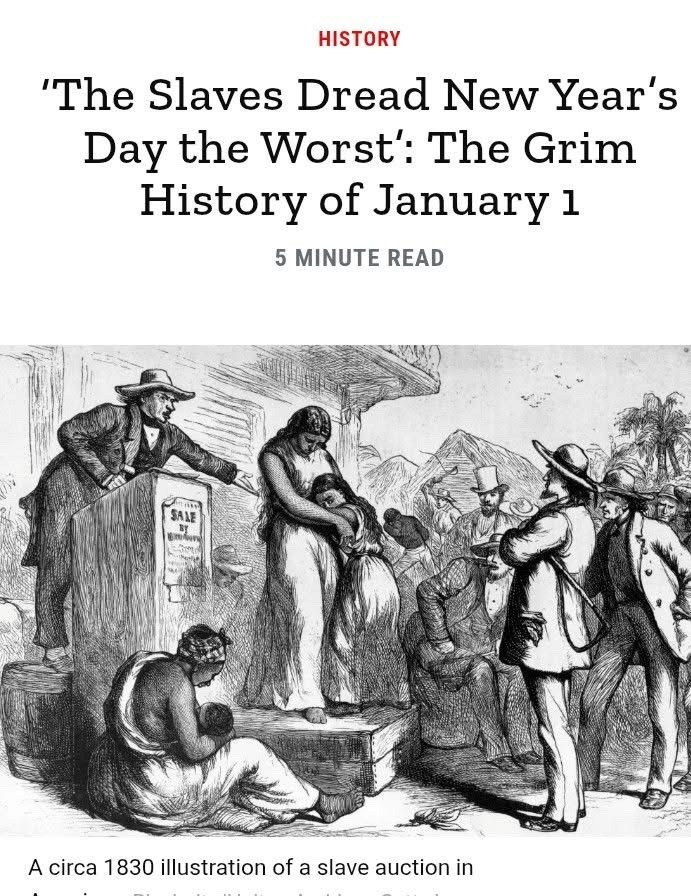
January 1st, or New Year's Day, was often called "Heartbreak Day" or "Hiring Day" for enslaved people in the Antebellum South, because it was the day owners would finalize contracts to rent them out or sell them, leading to brutal, sudden family separations, a stark contrast to the freedom celebrated today, notes the National Museum of African American History and Culture and History.com.
Why it was "Heartbreak Day":
Hiring Out: Many enslaved people were leased out to other plantations or businesses for the year, and January 1st was when these new arrangements began, often without notice.
Forced Separation: Parents might not know where their children were going, and spouses could be separated for the entire year or permanently.
Auctions: Some enslaved people were sold on this day, adding to the dread.
A Shift in Meaning:
While January 1st was a day of terror under slavery, it later became associated with hope, as it was the date President Lincoln signed the Emancipation Proclamation in 1863, changing the legal status of millions.
Watch Night vs. Heartbreak Day:
This is distinct from "Watch Night" or "Freedom's Eve," an annual New Year's Eve tradition where enslaved people gathered to await news of freedom, a concept that also connects to the promise of liberty on January 1st, 1863, notes the National Museum of African American History and Culture.
https://time.com/5750833/new-y....ears-day-slavery-his








Phree Thawt
Ellimina il commento
Sei sicuro di voler eliminare questo commento ?