He was good at selling cars. Too good, some thought.
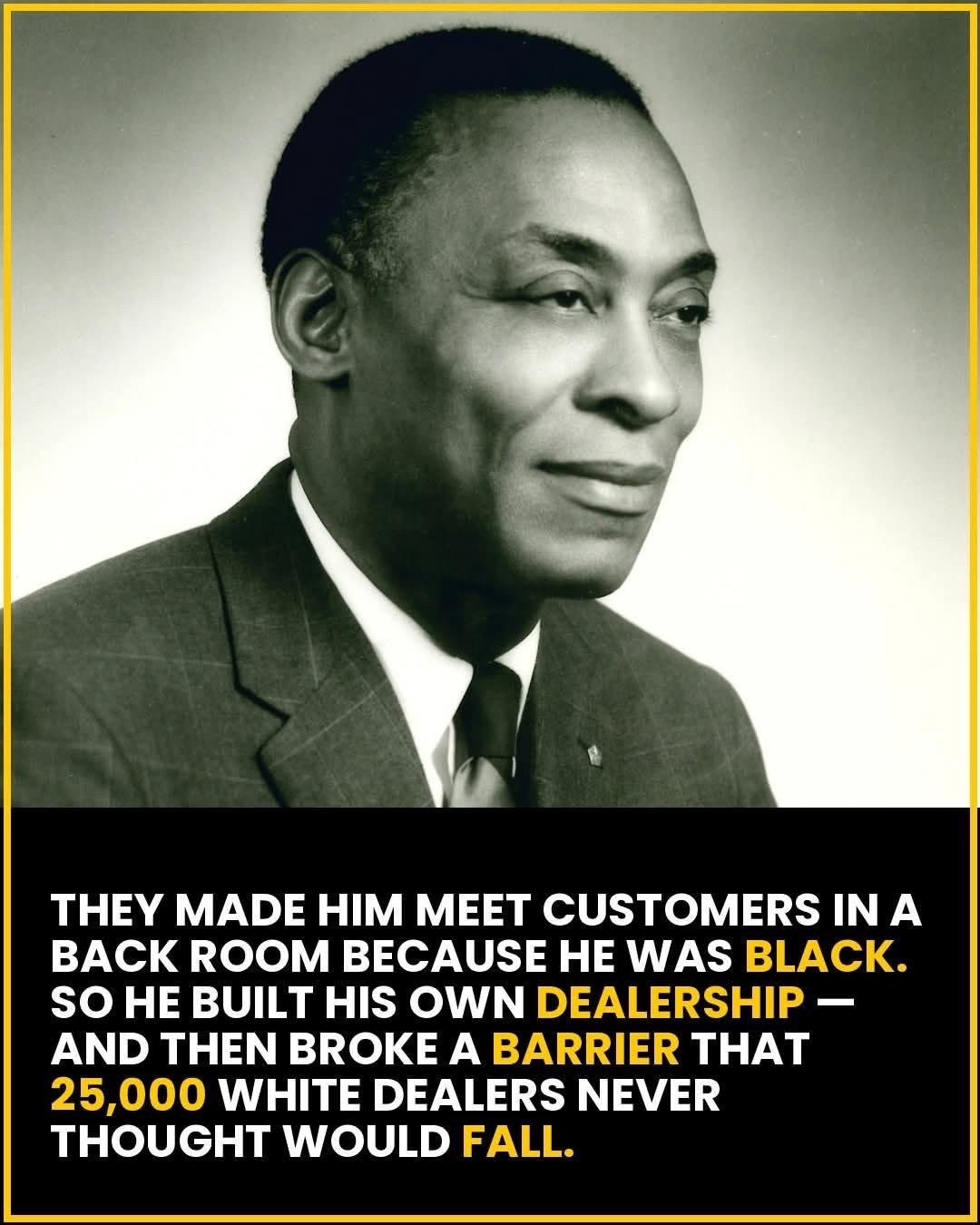
When Ed Davis got a job at a Detroit dealership in the late 1930s, his sales numbers were strong — stronger than many of his white colleagues. But there was a problem.
He was Black.
So management made a decision: Ed Davis could keep selling, but he wasn't allowed on the showroom floor. Customers couldn't see him. He was moved to a converted supply room on the second floor, where he could meet buyers quietly, away from the main business.
He was good enough to sell their cars. Not good enough to stand where everyone else stood.
Davis didn't argue. He didn't quit in anger. He made a different decision entirely.
He saved every cent he had, found a lot on East Vernor Avenue in the heart of Detroit's Black community, and on December 4, 1939, he opened Davis Motor Sales.
His own place. His own rules. His own floor to stand on.
He arrived at 5:30 every morning to clean the lot himself. He knew this neighborhood — he'd lived in it, worked in it, been shaped by it. And the neighborhood knew him back. Sales came quickly. Word spread. People trusted him because he treated them with honesty in an era when Black buyers were routinely overcharged, ignored, or turned away at white dealerships entirely.
But Davis wanted more than used cars.
For years, he knocked on doors at the big automakers, asking for a new-car franchise. For years, the answer was the same: no. The reasons were never said outright. They didn't have to be.
Then Studebaker called.
The South Bend automaker had noticed something: Black buyers in Detroit were a largely untapped market, and Ed Davis had their trust. In 1940, Studebaker offered him a franchise — making him the first African American in the United States to own a new-car dealership.
He was, as he would later write in his memoir, "the first Black dealer among the 25,000 dealerships of the Big Three."
Not the second. The first.
The decades that followed were not easy. Other dealers snubbed him at industry gatherings.
Some actively conspired to undercut his prices. The construction of Interstate 75 tore straight through his neighborhood, condemning his property and scattering the community that had built his business. The government paid him $75,000 for land worth far more and left him to start again.
He started again.
In 1963, at a press event, Davis was introduced to Chrysler management. They had been watching the demographics of Detroit shift. They understood what Davis had always known — that the Black community on Detroit's west side represented real buying power, and that no one understood that market better than Ed Davis.
On November 11, 1963, Ed Davis opened a Chrysler-Plymouth-Imperial dealership at Dexter and Elmhurst in Detroit. He became the first African American ever awarded a franchise from one of the Big Three automakers — General Motors, Ford, or Chrysler.
He was 52 years old. It had taken him 25 years of selling, rebuilding, and refusing to disappear to get there.
The dealership thrived. Davis received the Benjamin Franklin Quality Dealer Award. He received Time magazine's Quality Dealer Award.
The Detroit Auto Show gave him its highest honor. He sold an average of 1,000 cars a year out of a dealership planted in a neighborhood with a 45 percent unemployment rate — because he understood that dignity and trust could drive business where demographics said none was possible.
He closed the dealership in 1971, but he didn't slow down. Detroit's mayor appointed him general manager of the city's entire Department of Street Railways — making him the first African American to run Detroit's public transportation system as well.
In 1996, Ed Davis became the first African American inducted into the Automotive Hall of Fame.
He died on May 3, 1999, at 88 years old.
He had come to Detroit as a teenager from Louisiana. He had been pushed into a back room because of the color of his skin. And from that back room, he had built a career that cracked open an entire industry — not through protest or politics, but through relentless excellence, one sale at a time.
Sixty years after he opened Detroit's first Black-owned Big Three dealership, there were 313 Black-owned franchises across America and counting.
He didn't just sell cars.
He opened a door — and left it open for everyone who came after him.