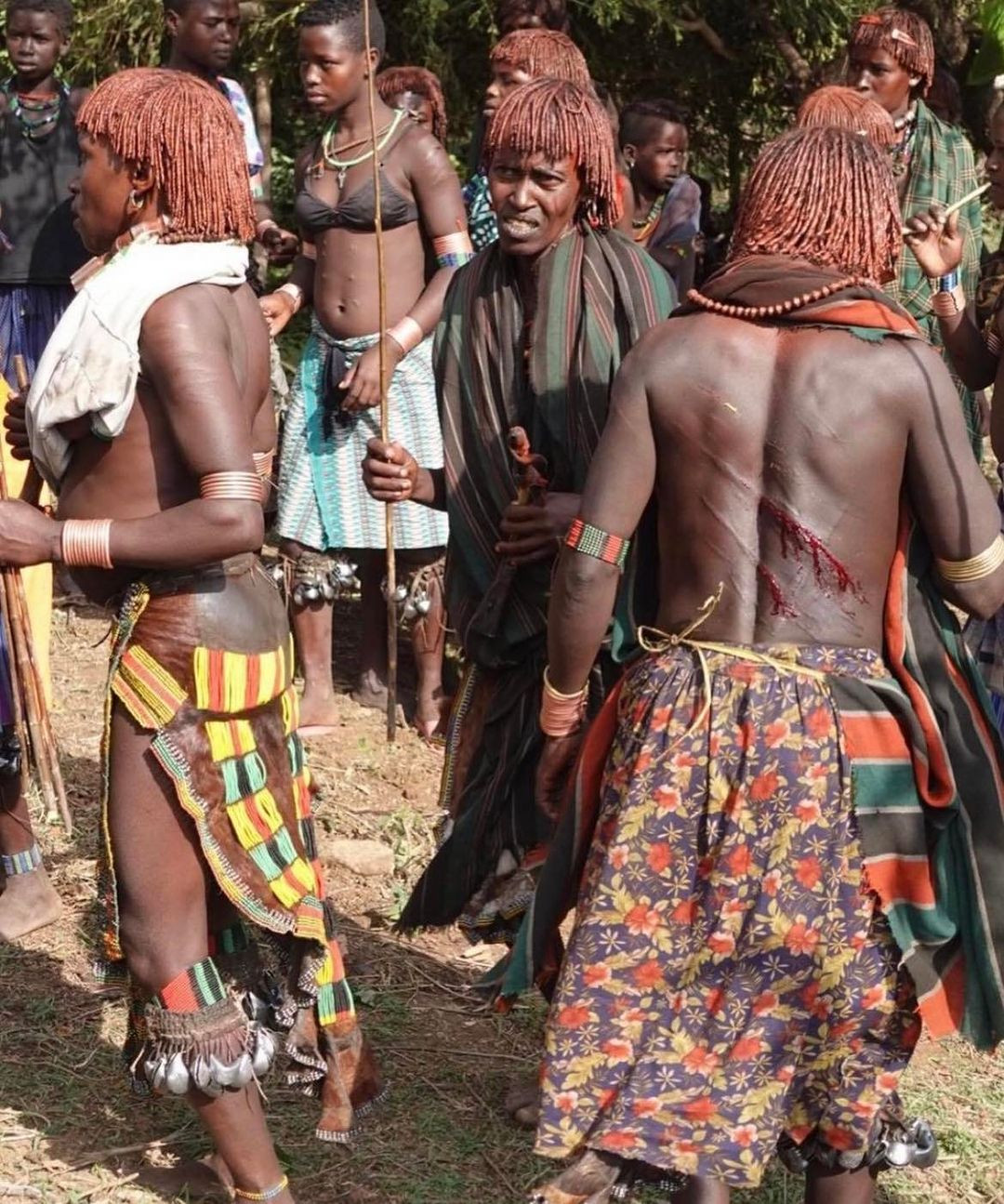
The scars on their back represent love and honor.
During the Bull Jumping Ceremony, a rite of passage for young boys, Hamer women are whipped to show, love, honor, and sacrifices they make for men.
Instead of fleeing, the women beg the men to whip them over and over again.
On the day of the ceremony, there is plenty of celebrating. Women dance in traditional dress - playing horns with their legs draped in bells - drinking home-brewed sorghum beer. Depending on the social status of the family, somewhere between 100 and 300 people are likely to attend.
Before the ceremony, the female relatives (with the exception of little girls) of the young man go to meet the Maza, men who have just passed the bull-jumping ceremony and who temporarily live apart from the rest of the tribe.
They demand to be whipped by these men as a way of showing their dedication and loyalty towards their male relatives. The idea here is to create a strong bond - an obligation - between them.
As they have undergone such pain so stoically on his behalf, he should feel a debt to protect them going into the future. This also signals their attractiveness as a future wife, and it becomes a kind of competition, with women refusing to back down and vowing to each endure the most pain.