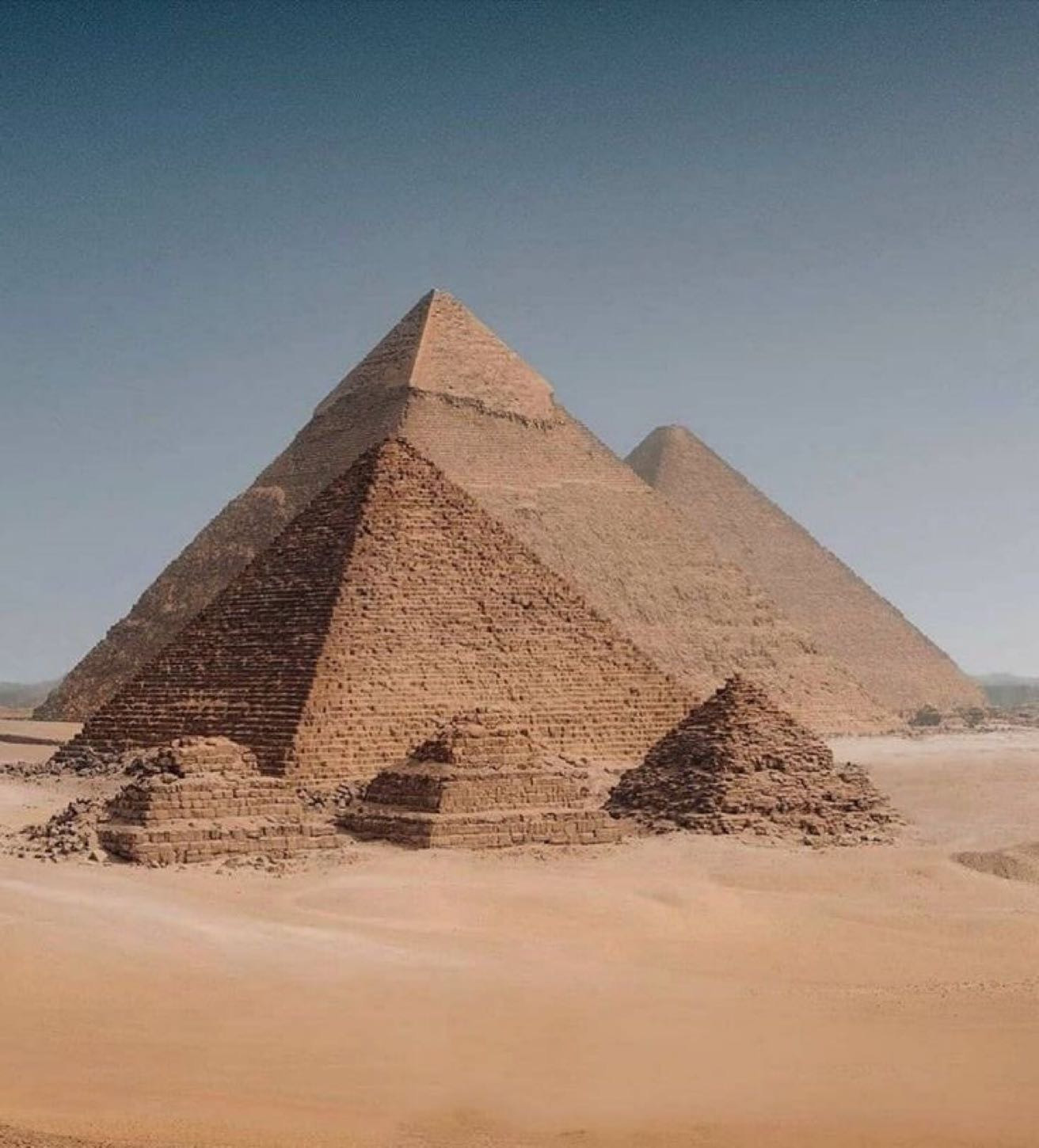
Physics can help us understand how the ancient Egyptians built the great pyramids of Giza, as well as how they interact with electromagnetic waves.
One of them is the wet sand technique. This technique involves wetting the sand to reduce the friction and the effort required to drag heavy blocks of stone on sleds. A team of physicists from the University of Amsterdam demonstrated this technique in 2014, using a simple experiment and numerical simulations. They showed that wetting the sand to just the right degree can reduce the required pulling force by up to 50%. This technique may have been used by the ancient Egyptians to transport the blocks from the Nile port to the pyramid site.
Another aspect of physics that can reveal some mysteries of the pyramids is the electromagnetic response. This refers to how the pyramids interact with radio waves of different frequencies and wavelengths. An international research group applied methods of theoretical physics to investigate this phenomenon in 2018. They used numerical modeling and analytical methods to calculate the electromagnetic field distribution inside and around the Great Pyramid of Giza. They found that under resonance conditions, meaning when the wavelength of the radio waves matches the size of the pyramid, the pyramid can concentrate electromagnetic energy in its internal chambers and under its base. This effect may have some applications for designing nanoparticles that can manipulate light at the nanoscale.