What happened to colored troops taken POW by Confederates in the Civil War?
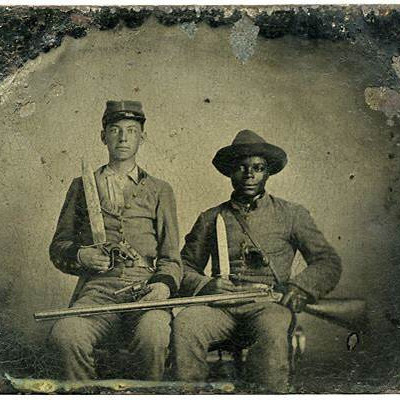
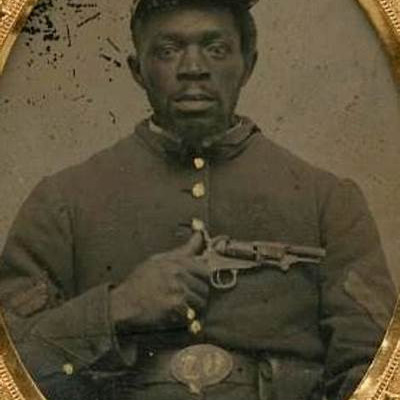
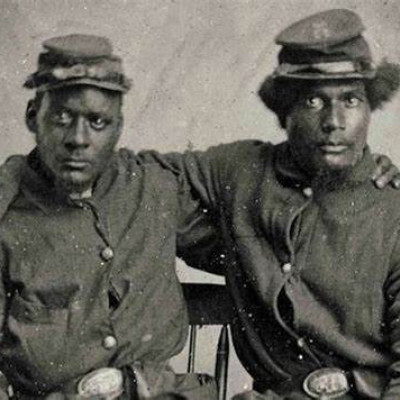
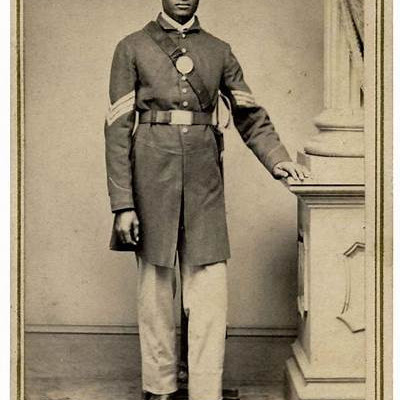
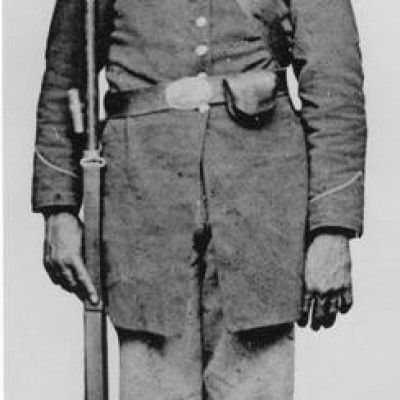
Three-fifths of all African troops in the Union army were former slaves and those that fought in combat units did so at great risk to their lives (beyond the expected risks associated with combat). The Confederate government’s official position was that black POWs would be executed, reclaimed by their former masters or sold into slavery. Lincoln’s threats of reprisals helped minimize the impact of Confederate actions.
Details of the brutality African soldiers suffered are known, but with less specificity. We know of the multiple slaughters of surrendering or captured blacks that occurred. And, we know that armed Africans were the South’s worst nightmare as southerners were terrified that the example of these soldiers would “infect” the rest of the slave population and inspire them to take-up arms against their enslavers. In southern eyes, that alone warranted the harshest treatment for captured Africans.
What is clear is that these soldiers faced harsher and more cruel treatment at the hands of their captors than did their white counterparts. We know with clarity the physical violence that slaves suffered pre-war as well as after the war. Further, while 14% of Union prisoners died while being held as POWs and 11.8% of Confederate POWs died in northern captivity, historian Caroline Newhall notes that almost 35% of African POWs died in southern captivity. These data points converge with official Confederate statements and southern attitudes on slaves as property and provide strong evidence of the cruelty African Union soldiers faced.
Cruelty and atrocities against African Union soldiers were not random acts of war, but were legislated and directed by the Confederate Congress and Jefferson Davis himself.
In late 1862, Davis stated: “All negro slaves captured in arms be at once delivered over to the executive authorities of the respective States to which they belong.” A resolution later adopted by the Confederate Congress provided that all “negroes or mulattoes,” slave or free, taken in arms should be tried for inciting servile insurrection and be subject to the death penalty.
In a letter to General Beauregard on this issue, The Confederate Secretary of War pointed out that "Slaves in flagrant rebellion are subject to death by the laws of every slave-holding State" but that "to guard, however, against possible abuse...the order of execution should be reposed in the general commanding the special locality of the capture."
Lincoln responded to this by threatening to retaliate against Confederate prisoners whenever African soldiers were killed or enslaved.
Davis publicly denounced Lincoln’s order; but, it did have — for the most part — the desired effect, as most African prisoners were not treated with the harsh justice mandated by Confederate policy, even though the Confederacy never officially acknowledged African-Americans as P.O.W.’s. Instead, what emerged were inconsistent practices in dealing with captured African American troops, depending on the time, place and the commander into whose hands they fell. Indeed, some Confederate officers encouraged the killing of African-American soldiers rather than taking them prisoner, and the atrocities committed against surrendering African soldiers at Poison Spring, Fort Pillow and Petersburg are now well known.
If not executed, captured African soldiers often found themselves treated very differently from white prisoners. Instead of being confined to camps, many African-American prisoners were put to forced labor.
As Robert Jones, a African soldier captured at Milliken’s Bend, La., recalled, “They took me to Rust, Tex., where they had me at work doing every kind of work, loading steamboats, rebuilding breastworks, while I was in captivity.”
Near Fort Gilmer, Va., captured African troops were forced to work under enemy fire in the trenches. In retaliation, the Union general Benjamin F. Butler placed an equal number of Confederate P.O.W.’s on forward trenches. Within a week, the African prisoners were removed from the front lines.
The sentiment that Africans under arms aroused -- along with the ingrained hostility of many Confederate soldiers -- set the stage for wartime atrocities. The most notorious incident occurred at a small Federal outpost north of Memphis, Tennessee, where Confederate cavalrymen under Nathan Bedford Forrest attacked Fort Pillow, which was garrisoned by about 500 troops.
More than half of the soldiers were African. The superior Confederate force overwhelmed the fort's defenders; Union casualties were high. But after the Federals surrendered, Forrest's men shot and killed a number of unarmed soldiers and officers, both black and white.
In October 1864 Saltville, Virginia, Confederate soldiers executed unarmed African prisoners, even raiding a hospital on two separate occasions and murdering wounded Africans in their sickbeds. 👉🏾 CONTINUED IN COMMENTS 👇🏾
 +2
+2








Zay Fucifino
But, despite facing intense racism and humiliating treatment from their own white colleagues in arms, Africans excelled in combat, providing an additional, critical edge in manpower to what the Union already possessed.
One Union captain explained the significance of African military participation on the attitudes of many white soldiers. "A great many [white people]," he wrote, "have the idea that the entire Negro race are vastly their inferiors. A few weeks of calm unprejudiced life here would disabuse them, I think. I have a more elevated opinion of their abilities than I ever had before. I know that many of them are vastly the superiors of those who would condemn them to a life of brutal degradation."
Of the 180,000 African Americans who fought for the Union, 37,300 died. More than 20 African Americans were awarded the Congressional Medal of Honor, the nation's most prestigious military decoration. Fourteen of those men earned their medals at Chaffin's Farm.
Slet kommentar
Er du sikker på, at du vil slette denne kommentar?