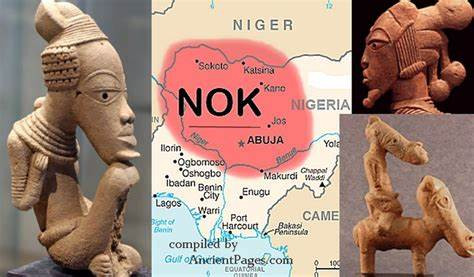
The Nok Civilization, which existed in what is now Nigeria 🇳🇬 is renowned as one of the earliest complex societies in West Africa. It is believed to have thrived from around 1500 BC to around 500 AD, making it one of the earliest Iron Age cultures in sub-Saharan Africa. The Nok people are especially famous for their distinctive and intricate terracotta sculptures, a number of which have been discovered at various archaeological sites in Nigeria.
Here are key points about the Nok Civilization:
1. Terracotta Sculptures: The Nok people are best known for their remarkable terracotta sculptures, which include human and animal figures. These sculptures were crafted using a unique and advanced method that involved a combination of modeling, firing, and finishing techniques. The Nok terracotta figures are notable for their naturalistic and stylized representations of human heads and bodies.
2. Iron Smelting: The Nok Civilization is considered one of the first cultures in West Africa to practice iron smelting and forging. The ability to work with iron was a crucial technological advancement that contributed to agricultural and economic development, as well as the production of tools and weapons.
3. Settlements and Agriculture: Nok settlements were primarily located near rivers, which provided fertile land for agriculture. The Nok people cultivated crops such as millet, sorghum, and yams. Agriculture played a vital role in sustaining the population and supporting the growth of complex societies.
4. Trade Networks: The Nok Civilization was engaged in trade with neighboring regions. Archaeological evidence suggests that they traded not only with nearby communities but also with more distant cultures. The exchange of goods, including iron tools and terracotta sculptures, contributed to the cultural and economic development of the Nok people.
5. Religion and Spirituality: While much of the Nok belief system remains unclear due to the lack of written records, it is believed that they had a spiritual and religious worldview. Some of the terracotta sculptures depict individuals with elaborate hairstyles, adornments, and symbolic markings, suggesting a possible connection to religious or spiritual practices.
6. Decline: The reasons for the decline of the Nok Civilization are not entirely clear. However, factors such as environmental changes, shifts in trade routes, and possibly internal conflicts may have played a role. The decline of the Nok Civilization led to the emergence of other cultures and societies in the region.
The Nok Civilization is significant not only for its early technological achievements but also for the artistic and cultural legacy represented by its distinctive terracotta sculptures. The Nok people laid the groundwork for subsequent civilizations in West Africa, contributing to the region's rich history and cultural diversity.