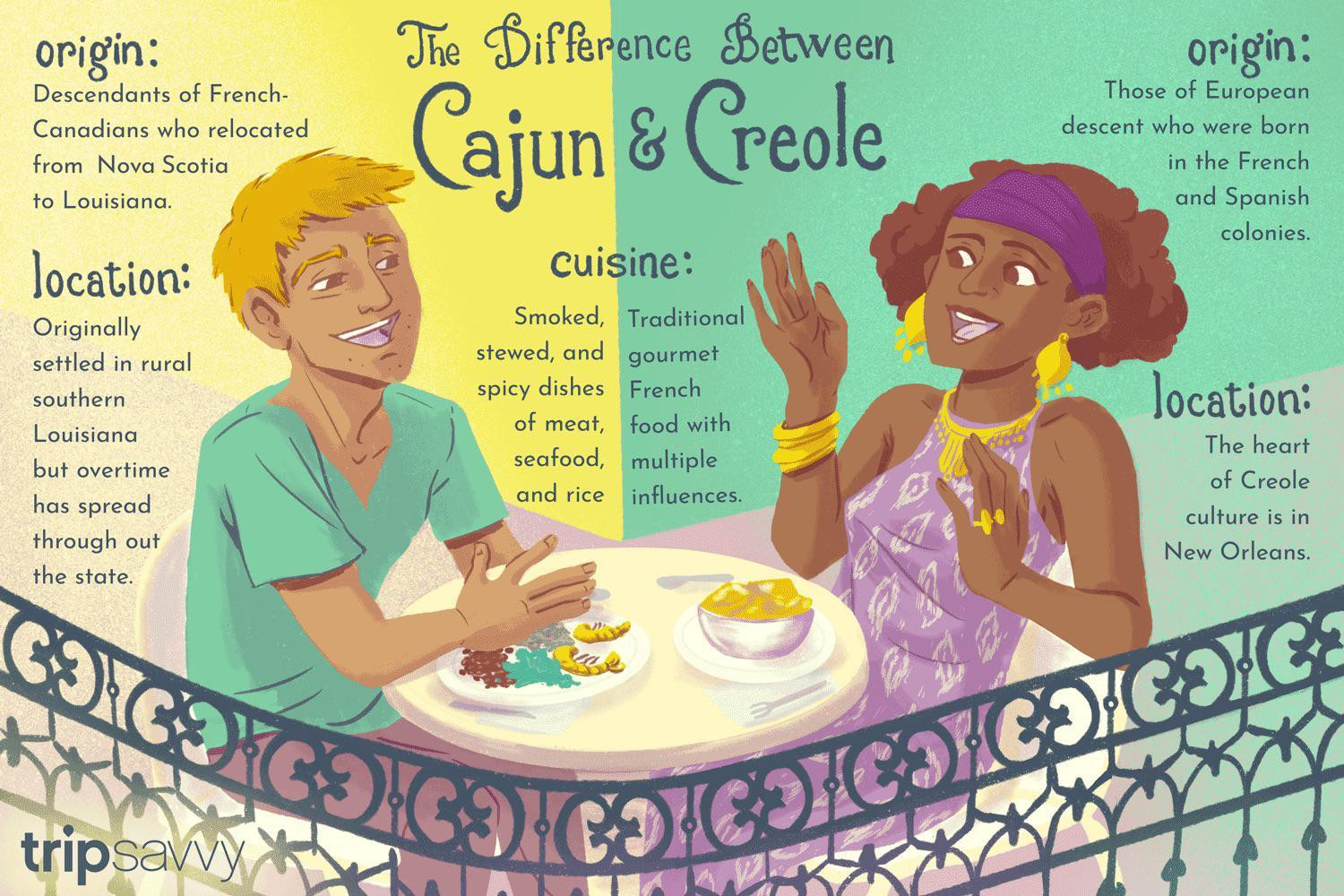
Why is New Orleans Creole and not Cajun?
“Cajun" specifically refers to the Acadians: the French settlers in Nova Scotia, some of whom had lived there for three generations or more, before the British expelled them between 1755 and 1764. Some were sent to other British colonies, and some were sent back to France. But when Spain took over Louisiana in 1763 and was offering free land to any colonists who would work the land and pay their taxes, many Acadians took the opportunity. They mostly settled west of New Orleans, on the prairies and in the wetlands.
The Cajuns were culturally and socially distinct from the French who had settled in New Orleans beginning in 1718: the Creoles (a word that originally applied to anyone of European descent who had been born in the New World, but that can encompass people with African and Native ancestry as well). New Orleans Creoles included wealthy plantation owners, traders, and businessmen; the Cajuns were mostly subsistence farmers. New Orleans Creoles generally spoke standard French until after the Civil War; many sent their children to be educated in France, if they could afford it. The Cajuns maintained their old French dialect, which is mostly intelligible to modern French speakers but sounds “rustic” to them.
Both groups have since intermarried with other groups that have immigrated to Louisiana: the Spanish, Germans, Irish, Americans, and others. And people move around; there are certainly Cajuns who live in New Orleans today. But New Orleans isn't Cajun, at its base, because it wasn't founded by the Acadians. The Acadians--"Cajuns” —mostly settled well to the west of it, in a region that's called Acadiana today.