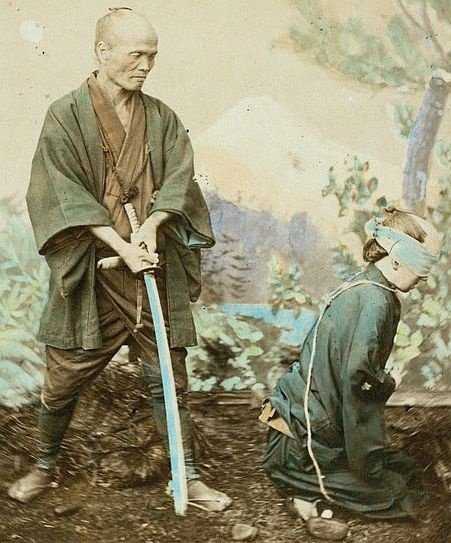
“Could a samurai kill any person he wanted, back in those days?”: Within Reason...
Even when Japan consisted of warring tribes with shifting allegiances and masterless samurai roaming the countryside, killing wasn’t indiscriminate. The people who were considered inferior to the samurai — like fishermen, farmers, and business owners — still contributed to society. And you don’t kill anyone without hurting someone higher up on the food chain by removing resources. Even the criminal guild — the gamblers and thieves who later became the yakuza — eschewed harming the katagi, the productive members of society. And those included the eta, the unmentionable ones who butched meat and tanned leather.
Of course people were killed by the samurai, but they were either deemed worthless — like prisoners — or deemed incorrigible, like anyone showing disrespect towards their superiors without apologizing immediately for their behaviour. People had to know their place, after all. But the rumoured indiscriminate killings by samurai were not as indiscriminate as you might think. Samurai had to answer to their masters too.