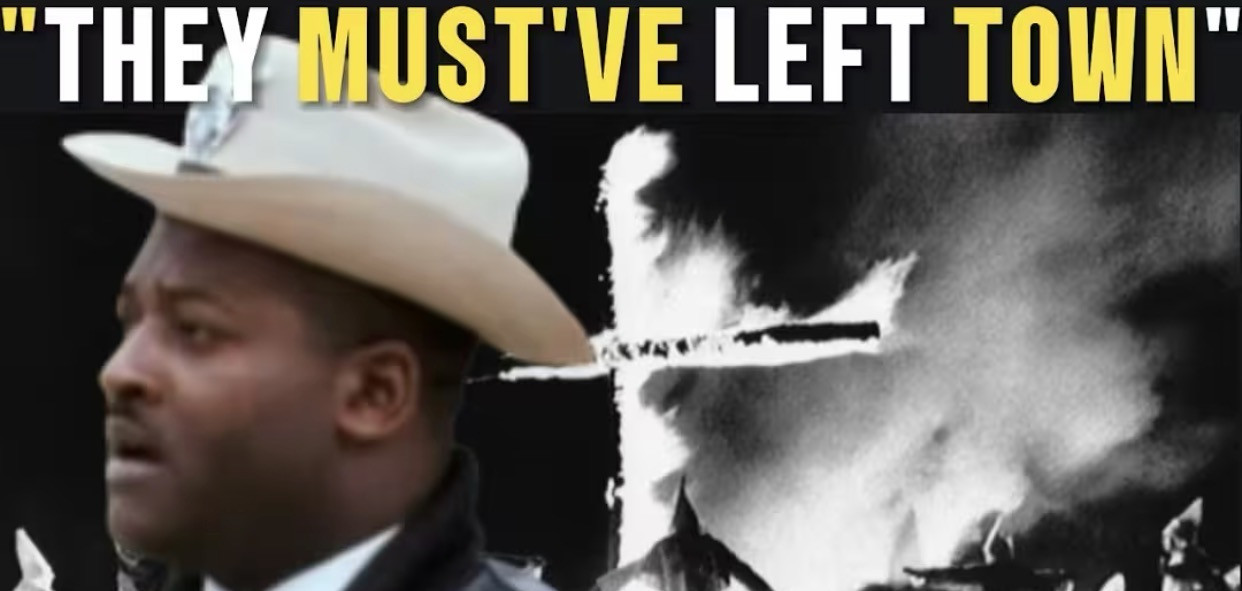
I hope their trashy asses receives the same treatment in prison Six former Mississippi law enforcement officers were sentenced this week for torturing and abusing two Black men in Rankin County, Mississippi.
Senior District Judge Tom Lee sentenced the defendants to terms in prison ranging from 10 to 40 years.
Christian Dedmon, 29, former Narcotics Investigator of the Rankin County Sheriff’s Office (RCSO), was sentenced to 40 years in prison.
Brett McAlpin, 53, former RCSO Chief Investigator, was sentenced to 27.25 years in prison.
Hunter Elward, 31, former RCSO Deputy, was sentenced to 20 years in prison.
Jeffrey Middleton, 46, former RCSO Lieutenant, was sentenced to 17.5 years in prison.
Daniel Opdyke, 28, former RCSO Deputy, was sentenced to 17.5 years in prison.
Joshua Hartfield, 32, former Narcotics Investigator for the Richland Police Department, was sentenced to 10 years in prison.
“The depravity of the crimes committed by these defendants cannot be overstated, and they will now spend between 10 and 40 years in prison for their heinous attack on citizens they had sworn to protect,” said Attorney General Merrick B. Garland. “These defendants kicked in the door of a home where two Black men were residing, handcuffed and arrested them without probable cause, called them racial slurs, and punched, kicked, tased, and assaulted them. After one of the defendants fired his gun in the mouth of one of the victims, breaking his jaw, the defendants gathered outside to come up with a cover story as the victim lay bleeding on the floor. Officers who violate constitutional rights will be held accountable by the Justice Department for their crimes that harm individual victims and betray the trust of entire communities. I am grateful to the Department’s Civil Rights Division, the U.S. Attorney’s Office for the Southern District of Mississippi, the FBI Jackson Field Office, and our state partners for their outstanding work bringing these defendants to justice.”
“It is hard to imagine a more atrocious set of civil rights violations than those carried out by the defendants in this case,” said FBI Director Christopher Wray. “But it is also hard to imagine more important work than investigating those crimes and seeking justice for the victims. As the result of the bureau’s color-of-law investigation, which we worked in collaboration with our federal and state partners, all six pleaded guilty last August and will serve lengthy sentences for their crimes.”
“By holding these officers accountable, we are sending a clear message that law enforcement abuse of Black people, or any American, will not be tolerated in our country,” said Assistant Attorney General Kristen Clarke of the Justice Department’s Civil Rights Division. “These six white law enforcement officers sought to dehumanize two innocent Black men through cruel, violent, and lawless abuse. The defendants didn’t count on the victims’ courage to come forward and tell the truth or the justice system to hold them accountable. The court imposed severe sentences reflecting the defendants’ savagery, including the longest federal sentence in recent years for a civil rights police misconduct case. Justice demands accountability, especially when the defendants’ actions not only scarred the victims physically and emotionally, but also harmed the entire community, stripping away their sense of security, corroding trust and respect for the police.”
“We expect our law enforcement officers to take seriously their oath to be our protectors, but these defendants instead chose to be predators on a hate-fueled power trip,” said U.S. Attorney Todd Gee for the Southern District of Mississippi. “Rather than serving Mississippi, the defendants treated it as a place where they could assault, intimidate, torture, and frame their victims at will. These violations of civil rights should serve as a reminder that we still have a lot of work to do in Mississippi and this nation to ensure that law enforcement officers are properly hired, trained, equipped, supervised, and held accountable for their actions.”
“We hold positions of trust and serve as stewards of authority for the community. Color of law violations are harmful to the victims, to the American people, and to the law enforcement community across the globe,” said Acting Special Agent in Charge Maher Dimachkie of the FBI Jackson Field Office. “These six individuals violated their oaths and disgraced other law enforcement officers that carry their duties with pride and honor. We will continue to execute our duties to the highest level of ethical and moral values. We will continue to work with our community partners to rebuild and strengthen the partnership and trust in law enforcement. The FBI remains steadfast in aggressively investigating and bringing those who misuse their authority to justice.”